Happy Birthday
- Patty Hill (1868–1946)
- Mildred Jane Hill (1859–1916)
- Composed
- 1893
- Genre
- folk
- Level
- beginner
Welcome to a world where singing 16 words can cost you $1,500
Sixteen words. Four of them are "happy," three are "you," and one is your name. By any reasonable measure, this is the laziest piece of writing in recorded human history. It also happens to be the most performed song on earth. There is a lesson there about keeping things simple.
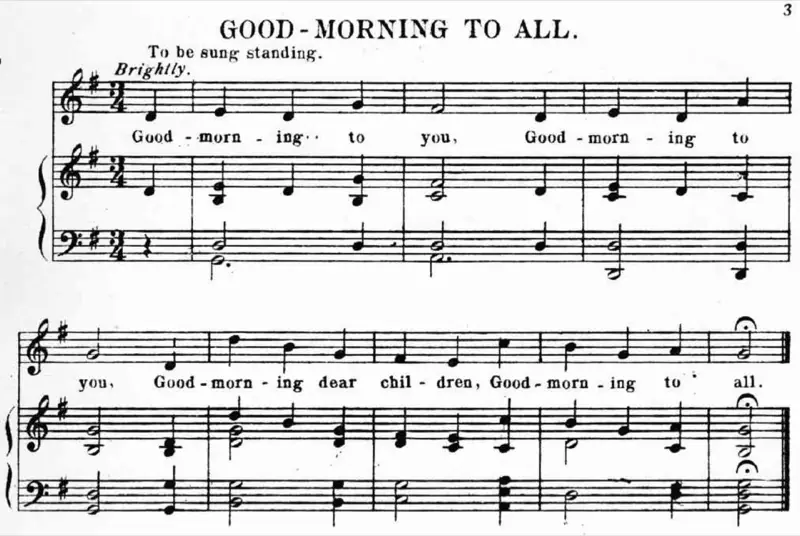
The melody was composed by Mildred Hill and the lyrics were written by her sister Patty, but it was originally a classroom greeting song called "Good Morning to All" intended to be a daily greeting for small children.
It is still unclear who changed the lyrics that turned it into a birthday song, but it was first published with birthday lyrics in 1924 in a book edited by Robert H. Coleman, without authorisation (just to really set the tone for everything that follows).
In 1934, Mildred and Patty's sister Jessica filed a lawsuit claiming the use of the melody was unauthorised, and copyrighted the song through the publisher Clayton F. Summy Company. Fine. Reasonable. The family wanted credit.
Then the rights passed from Clayton F. Summy Co. to a company called Birch Tree Ltd, and then in 1988, Warner/Chappell — the largest music publisher in the world — purchased Birch Tree for $25 million, primarily because they had correctly identified that owning the rights to Happy Birthday was essentially a money printer.
For nearly three decades, a multinational corporation legally owned your birthday. (earning $2 million per year)
The whole thing unravelled beautifully. A filmmaker named Jennifer Nelson was making a documentary about Happy Birthday when Warner/Chappell sent her a bill for $1,500 to use the song in her film about the song. Rather than pay it, she sued them. A federal judge eventually ruled that Warner/Chappell's copyright was invalid because the original 1935 copyright applied only to a specific piano arrangement, not to the song itself. Warner/Chappell settled for $14 million, and it is estimated they had collected more than $50 million in licensing fees over the years...
The copyright was ruled invalid in 2015 so I'm happy to say that you can play the song on Vitzik without expecting a $1,500 bill.