Nocturne Op. 9 No. 2
- Frédéric Chopin (1810–1849)
- Published
- 1832
- Genre
- classical
- Level
- intermediate
A borrowed piano
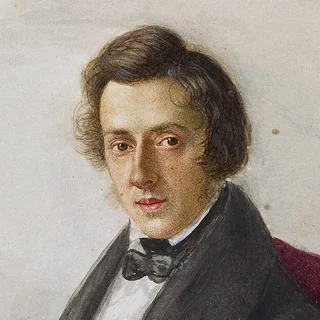
In the autumn of 1831, a 21-year-old slender Polish pianist stepped off a stagecoach in Paris. His name was Frédéric Chopin. Back home, Warsaw had just fallen to the Russian army.1
In a few months, the stranger became a local celebrity. Camille Pleyel, the top piano maker in Paris, lent him a piano to compose and teach on, and his own concert hall for his debut. A friend wrote home that Chopin "utterly destroyed every local pianist and all Paris was stupefied."
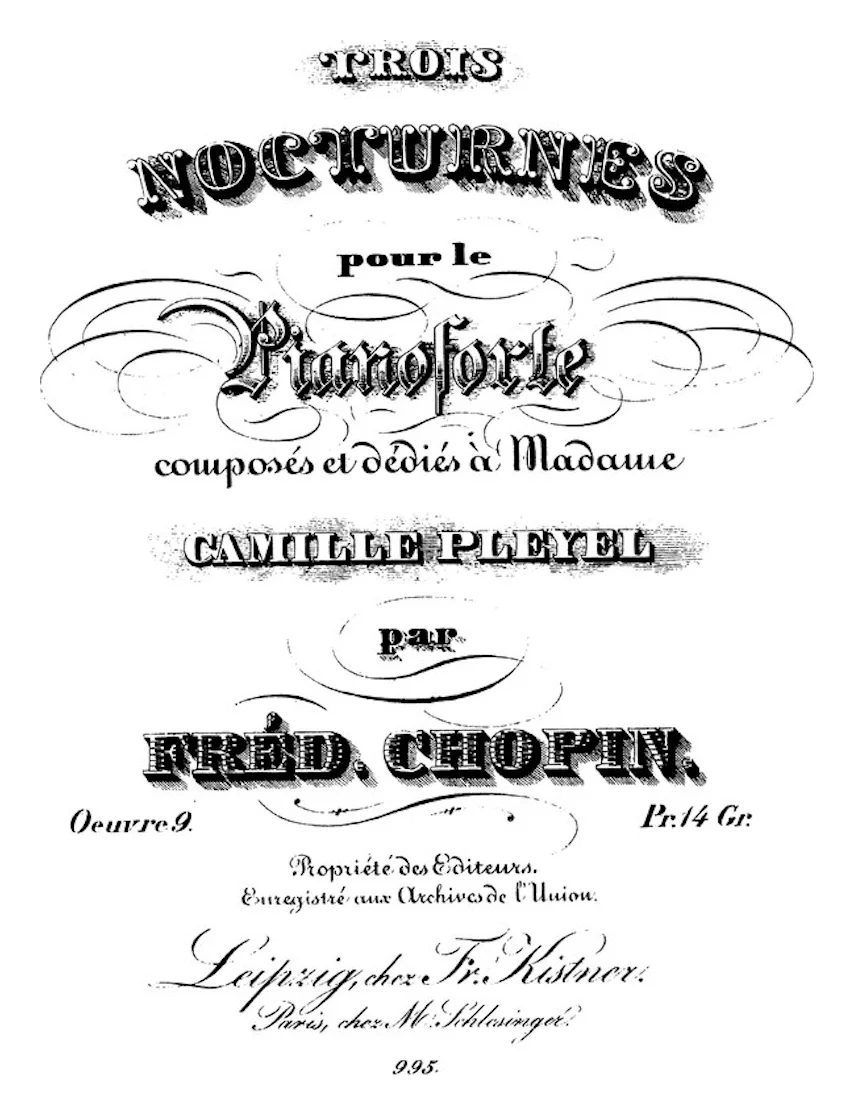
It was in that period that he published a set of three nocturnes as Op. 9. The second one is the one you know. The one in every restaurant, every wedding, every "relaxing piano for studying" playlist. Yes, that one.
A borrowed idea
Plot twist: the nocturne wasn't Chopin's idea. It was invented by John Field, an Irish pianist who wrote the first ones around 1812.2 Chopin took the concept, made it cooler, and became the name everyone remembers.
Field met Chopin in Paris in 1832 and was not impressed: he is said to have called his music "a sickroom talent". Bit harsh, John. Then again, if someone took your idea and history forgot your name, you'd be salty too.
He wasn't the only hater. The Berlin critic Ludwig Rellstab reviewed the Op. 9 nocturnes with a simple request: "we plead with Mister Chopin to return to nature."1 I'll keep that one in my list of rare insults.
And, just for you, my favourite, from his review of the Études: "he who has sprained fingers will be able to straighten them out with these études, but he who has healthy fingers should be careful not to play these études unless surgeons are nearby."1
A borrowed bed
Op. 9 is dedicated to Marie Pleyel, a brilliant pianist and wife of Camille Pleyel.3 I found rumours of an affair between her and Franz Liszt (yes THE Franz Liszt) in Chopin's apartment and if you are here for the tea I am here to serve you.
Marie married Camille in 1831. He was more than 20 years older than her, and Marie was, let's say, not a big fan of monogamy. They separated about four years later, on account of her infidelities.
The story goes that, in early 1835, while Chopin was out of Paris, Liszt used his apartment on the rue de la Chaussée d'Antin for a little rendezvous with... Marie Pleyel, freshly separated from her husband. The ex-wife of Chopin's friend, doing "things" in Chopin's home with another friend of Chopin's. The question is... what did Chopin do with that information?
No one can prove this story is true, but there are some bits of history that seem to confirm it. Four years later, Liszt ran into Marie in Vienna and wrote to his partner, Marie d'Agoult, that she asked him if he remembered "Chopin's room". His answer: "Of course, madame, how to forget?"4